
*Editor’s note (October 2026): We continue to search for this door and complete an essay on it. In the meantime, we are pleased to publish Mohammad Farsimadan’s animation and transcription of the door’s important inscription.
15Door of the tomb of Emamzadeh Yahya at Varamin

Iran, exact place of production unknown
Wood, pencil (مداد) or cork (چوب پنبه) technique, with metal fittings and nails (گل میخ)
Dated Safar 971/September 1563
Signed by Maʿsum Najjar (Maʿsum the woodworker)
Made at the order of Mowlana Jahangir Mohtaseb Varamini for the tomb of Emamzadeh Yahya, Varamin
In situ in the tomb of Emamzadeh Yahya, Varamin, in 1279/1863
Removed from the tomb at some point between 1863 and 1915
Offered for sale in New York in 1915 at the Kent-Shmavon Galleries
Current whereabouts unknown
*If you have seen this door, please be in touch (33arches.overton@gmail.com)
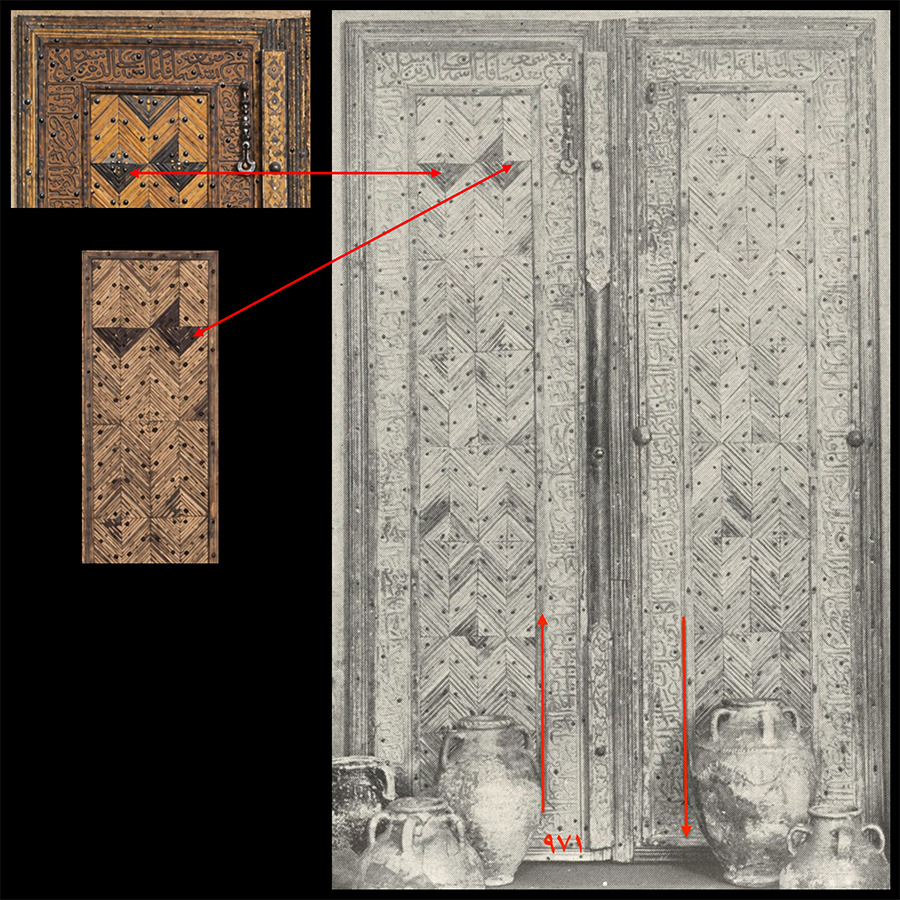
Photograph after The Kent-Shmavon Collection: The Ancient Art of Asia and Europe, 1915
Speaking Object Animation of the Inscription on the 971/1563 Wooden Door of the Emamzadeh Yahya, Varamin
Created and recited by Mohammad Farsimadan
This animation is based on the black-and-white photograph of the Emamzadeh Yahya’s door reproduced in The Kent-Shmavon Collection: The Ancient Art of Asia and Europe, New York, 1915. Due to the low quality of the photograph, a bar-like indicator has been used instead of highlighting every letter. Once the door is hopefully located, it will be possible to create a more precise animation using a better photograph. The recitation of Arabic is intentionally done by a native Persian speaker. Because the door’s primary audience would have been Persian speakers, this reading attempts to echo their original pronunciation. This ~3-minute video can also be watched in high resolution on the Emamzadeh Yahya Project’s YouTube channel.
Transcription of the Inscription on the 971/1563 Wooden Door of the Emamzadeh Yahya, Varamin
Mohammad Farsimadan
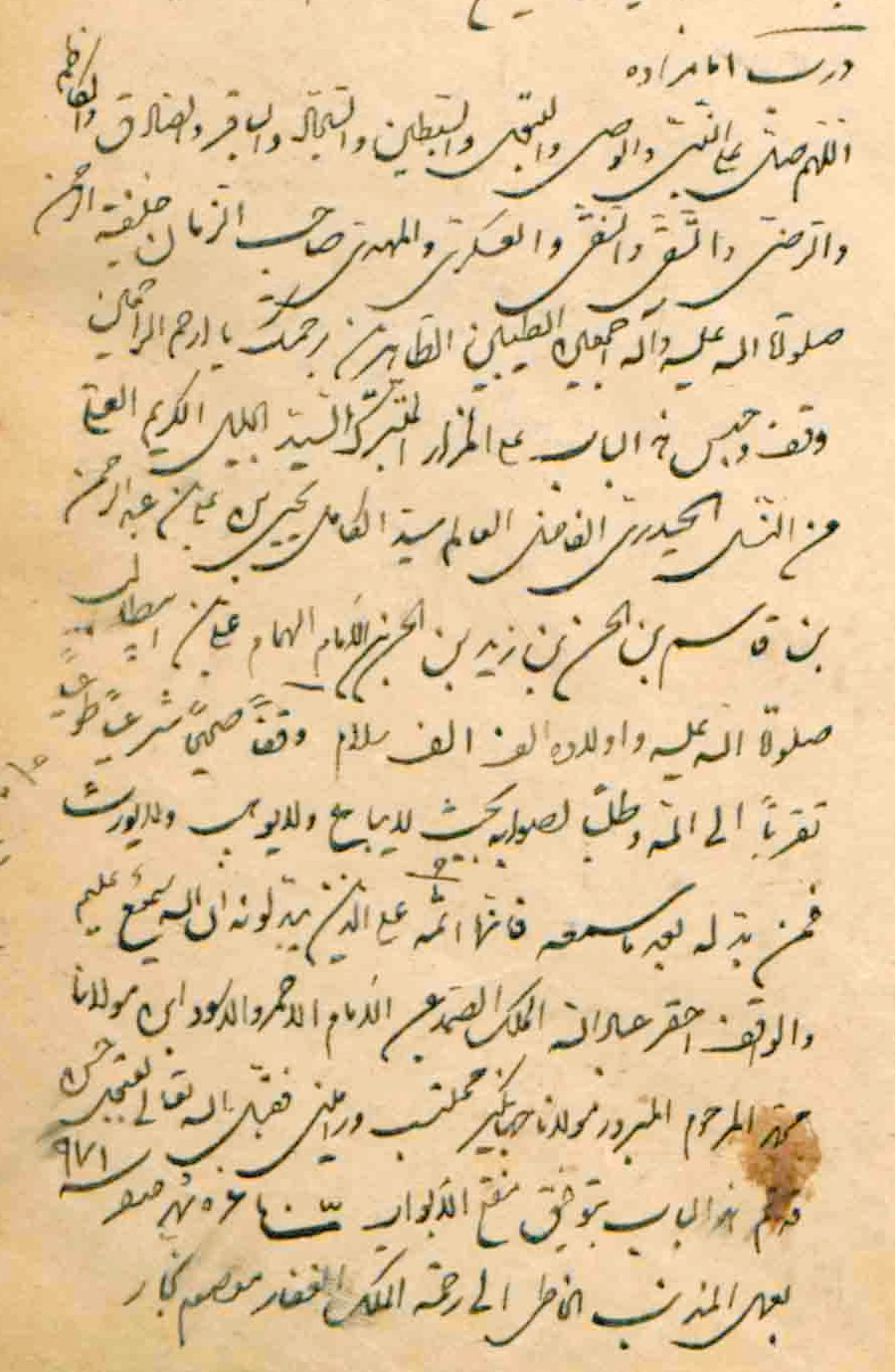
This transcription was compiled from two sources: the 1279/1863 recording of the door’s inscription when it was still in the tomb (fig. 1), and the 1915 photograph of the door when it was in New York (fig. 2). Numbers in parentheses indicate the line number in the 1279/1863 transcription. Notes in brackets relate to the original sources. To see these lines on the door and for an English translation, please watch the animation.
(1) اللهم صل علی النبی و الوصی و البتول و السبطین و السجاد و الباقر و الصادق و الکاظم (2) و الرضا و التقی و النقی و العسگری و المهدی صاحب الزمان خلیفة الرحمن (3) صلواة الله علیه و آله اجمعین الطیبین الطاهرین برحمتک یا ارحم الراحمین
(4) وَقَّـفَ و حَبَّسَ هذا الباب علی مزار المتبرک السید الجلیل الکریم العلی (5) من النسل الحیدری الفاضل العالم سید الکامل یحیی بن علی بن عبد الرحمن (6) بن قاسم بن الحسن بن زید بن الحسن بن الامام الهُمام علی بن ابیطالب، (7) صلواة الله علیه و اولاده الف الف سلام
وقفاً صحیحاً شرعیاً طوعیاً (8) تقرباً الی الله و ظَلً بصوابه بحیث لا یبیع و لا یوهب و لا یورث (9) فمن بدله بعدما سمعه فانما اثمه على الذین یبدلونه ان الله سمیعٌ علیم
(10) و الوقف احقر العباد الله الملک الصمد عبد الامام الاحمر و الاسود ابن مولانا (11) محمد المرحوم المبرور مولانا جهانگیر محتسب ورامینی فقبل الله تعالی لمحبین[؟] حسین[؟]
(12) قد تم هذا الباب بتوفیق مفتح الابواب غره شهر صفر سنه ۹۷۱ [احدی و سبعین و ستمائه] [Most of this line is obscured by large ceramic jars in the 1915 photograph, so the 1279/1863 transcription has been used. The date in digits is visible in the 1915 photograph.]
(13) بعمل المذنب الخاطی الی رحمه الملک الغفار معصوم نجار [This entire line is obscured by ceramic jars in the 1915 photograph.]

Related pages:
Citation: Mohammad Farsimadan, “Emamzadeh Yahya, Varamin: The Speaking Wooden Door, Safar 971/September 1563.” Animated recitation in The Emamzadeh Yahya at Varamin: An Online Exhibition of an Iranian Shrine, directed and edited by Keelan Overton. 33 Arches Productions, October 20, 2025. Host: Khamseen: Islamic Art History Online.